The Cambridge World History of Slavery: Volume 3, AD 1420–AD 1804
Volume 3 of The Cambridge World History of Slavery is a collection of essays exploring the various manifestations of coerced labor in Africa, Asia and the Americas between the opening up of the Atlantic world and the formal creation of the new nation of Haiti. The authors, well-known authorities in their respective fields, place slavery in the foreground of the collection but also examine other types of coerced labor. Essays are organized both nationally and thematically and cover the major empires, coerced migration, slave resistance, gender, demography, law and the economic significance of coerced labor. Non-scholars will also find this volume accessible.
Product Information
Product Information
Shipping & Returns
Shipping & Returns
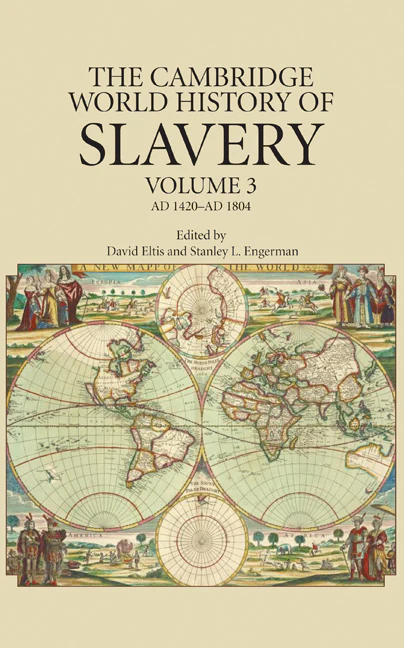
The Cambridge World History of Slavery: Volume 3, AD 1420–AD 1804
The Cambridge World History of Slavery: Volume 3, AD 1420–AD 1804
Volume 3 of The Cambridge World History of Slavery is a collection of essays exploring the various manifestations of coerced labor in Africa, Asia and the Americas between the opening up of the Atlantic world and the formal creation of the new nation of Haiti. The authors, well-known authorities in their respective fields, place slavery in the foreground of the collection but also examine other types of coerced labor. Essays are organized both nationally and thematically and cover the major empires, coerced migration, slave resistance, gender, demography, law and the economic significance of coerced labor. Non-scholars will also find this volume accessible.
Original: $230.83
-65%$230.83
$80.79Product Information
Product Information
Shipping & Returns
Shipping & Returns
Description
Volume 3 of The Cambridge World History of Slavery is a collection of essays exploring the various manifestations of coerced labor in Africa, Asia and the Americas between the opening up of the Atlantic world and the formal creation of the new nation of Haiti. The authors, well-known authorities in their respective fields, place slavery in the foreground of the collection but also examine other types of coerced labor. Essays are organized both nationally and thematically and cover the major empires, coerced migration, slave resistance, gender, demography, law and the economic significance of coerced labor. Non-scholars will also find this volume accessible.