The Cambridge Companion to Hobbes
It was as a political thinker that Thomas Hobbes first came to prominence, and it is as a political theorist that he is most studied today. Yet the range of his writings extends well beyond morals and politics. Hobbes had distinctive views in metaphysics and epistemology, and wrote about such subjects as history, law, and religion. He also produced full-scale treatises in physics, optics, and geometry. All of these areas are covered in this Companion, most in considerable detail. The volume also reflects the multidisciplinary nature of current Hobbes scholarship by drawing together perspectives that are now being developed in parallel by philosophers, historians of science and mathematics, intellectual historians, political scientists, and literary theorists.
Product Information
Product Information
Shipping & Returns
Shipping & Returns
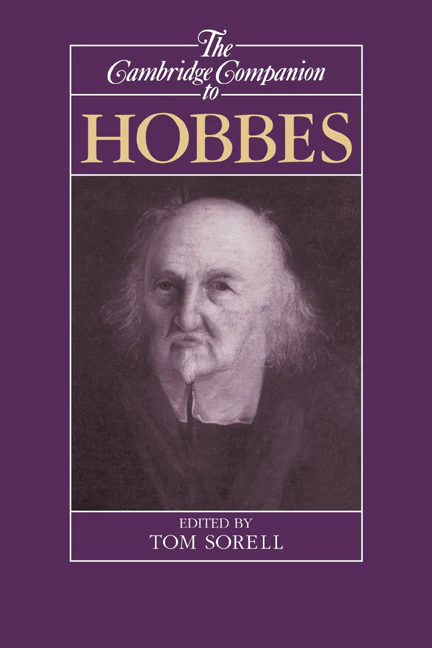
The Cambridge Companion to Hobbes
The Cambridge Companion to Hobbes
It was as a political thinker that Thomas Hobbes first came to prominence, and it is as a political theorist that he is most studied today. Yet the range of his writings extends well beyond morals and politics. Hobbes had distinctive views in metaphysics and epistemology, and wrote about such subjects as history, law, and religion. He also produced full-scale treatises in physics, optics, and geometry. All of these areas are covered in this Companion, most in considerable detail. The volume also reflects the multidisciplinary nature of current Hobbes scholarship by drawing together perspectives that are now being developed in parallel by philosophers, historians of science and mathematics, intellectual historians, political scientists, and literary theorists.
Original: $40.25
-65%$40.25
$14.09Product Information
Product Information
Shipping & Returns
Shipping & Returns
Description
It was as a political thinker that Thomas Hobbes first came to prominence, and it is as a political theorist that he is most studied today. Yet the range of his writings extends well beyond morals and politics. Hobbes had distinctive views in metaphysics and epistemology, and wrote about such subjects as history, law, and religion. He also produced full-scale treatises in physics, optics, and geometry. All of these areas are covered in this Companion, most in considerable detail. The volume also reflects the multidisciplinary nature of current Hobbes scholarship by drawing together perspectives that are now being developed in parallel by philosophers, historians of science and mathematics, intellectual historians, political scientists, and literary theorists.