SALE The Mirror of Art
This book is unused and unread. It may have some cosmetic imperfections such as scuffing, creasing or fading. It's stamped 'damaged'.
This book cannot be discounted further.
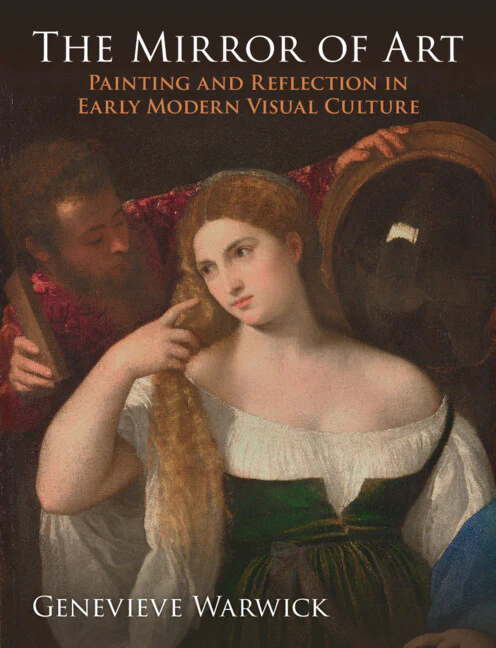
One of the key pictorial developments of Renaissance art was a conceptualisation of painting as a mirror reflection of the visible world. The idea of painting as specular was argued in Renaissance art theory, demonstrated in art practice, and represented in painting itself. Both within the artist's workshop and within pictorial representation, the mirror-image became the instrument, the emblem, and the conceptual definition of what a painting was. In this volume, Genevieve Warwick brings a dual focus to the topic through an exploration of the early modern elision of the picture plane with the mirror – image. She considers the specular configuration of Renaissance painting from various thematic points of view to offer a fully interdisciplinary analysis of the mirror analogy that pervaded not only art theory and art-making, but also the larger cultural spheres of philosophy, letters, and scientific observation. Warwick's volume recasts our understanding of the inter-visual relationships between disciplines, and their consequences for a specular definition of Renaissance painting.
- Reconceptualizes the story of Renaissance art through recourse of the mirror-image as the instrument and exemplum of painting's new-found definition as mimesi
- Considers the multi-valence of the mirror and the mirror-image across interdisciplinary boundaries of the early modern arts and sciences
- Analyses a critical concept of Renaissance & Early Modern cultures: the mirror as the emblematic image of speculative and reflective thought
Product Information
Product Information
Shipping & Returns
Shipping & Returns
SALE The Mirror of Art
SALE The Mirror of Art
This book is unused and unread. It may have some cosmetic imperfections such as scuffing, creasing or fading. It's stamped 'damaged'.
This book cannot be discounted further.
One of the key pictorial developments of Renaissance art was a conceptualisation of painting as a mirror reflection of the visible world. The idea of painting as specular was argued in Renaissance art theory, demonstrated in art practice, and represented in painting itself. Both within the artist's workshop and within pictorial representation, the mirror-image became the instrument, the emblem, and the conceptual definition of what a painting was. In this volume, Genevieve Warwick brings a dual focus to the topic through an exploration of the early modern elision of the picture plane with the mirror – image. She considers the specular configuration of Renaissance painting from various thematic points of view to offer a fully interdisciplinary analysis of the mirror analogy that pervaded not only art theory and art-making, but also the larger cultural spheres of philosophy, letters, and scientific observation. Warwick's volume recasts our understanding of the inter-visual relationships between disciplines, and their consequences for a specular definition of Renaissance painting.
- Reconceptualizes the story of Renaissance art through recourse of the mirror-image as the instrument and exemplum of painting's new-found definition as mimesi
- Considers the multi-valence of the mirror and the mirror-image across interdisciplinary boundaries of the early modern arts and sciences
- Analyses a critical concept of Renaissance & Early Modern cultures: the mirror as the emblematic image of speculative and reflective thought
Product Information
Product Information
Shipping & Returns
Shipping & Returns
Description
This book is unused and unread. It may have some cosmetic imperfections such as scuffing, creasing or fading. It's stamped 'damaged'.
This book cannot be discounted further.
One of the key pictorial developments of Renaissance art was a conceptualisation of painting as a mirror reflection of the visible world. The idea of painting as specular was argued in Renaissance art theory, demonstrated in art practice, and represented in painting itself. Both within the artist's workshop and within pictorial representation, the mirror-image became the instrument, the emblem, and the conceptual definition of what a painting was. In this volume, Genevieve Warwick brings a dual focus to the topic through an exploration of the early modern elision of the picture plane with the mirror – image. She considers the specular configuration of Renaissance painting from various thematic points of view to offer a fully interdisciplinary analysis of the mirror analogy that pervaded not only art theory and art-making, but also the larger cultural spheres of philosophy, letters, and scientific observation. Warwick's volume recasts our understanding of the inter-visual relationships between disciplines, and their consequences for a specular definition of Renaissance painting.
- Reconceptualizes the story of Renaissance art through recourse of the mirror-image as the instrument and exemplum of painting's new-found definition as mimesi
- Considers the multi-valence of the mirror and the mirror-image across interdisciplinary boundaries of the early modern arts and sciences
- Analyses a critical concept of Renaissance & Early Modern cultures: the mirror as the emblematic image of speculative and reflective thought