Ralph Cudworth: A Treatise Concerning Eternal and Immutable Morality
Ralph Cudworth (1617–1688) deserves recognition as one of the most important English seventeenth-century philosophers after Hobbes and Locke. In opposition to Hobbes, Cudworth proposes an innatist theory of knowledge which may be contrasted with the empirical position of his younger contemporary Locke, and in moral philosophy he anticipates the ethical rationalists of the eighteenth century. A Treatise Concerning Eternal and Immutable Morality is his most important work, and this volume makes it available, together with his shorter Treatise of Freewill, with a historical introduction, a chronology of his life, and an essay on further reading.
Product Information
Product Information
Shipping & Returns
Shipping & Returns
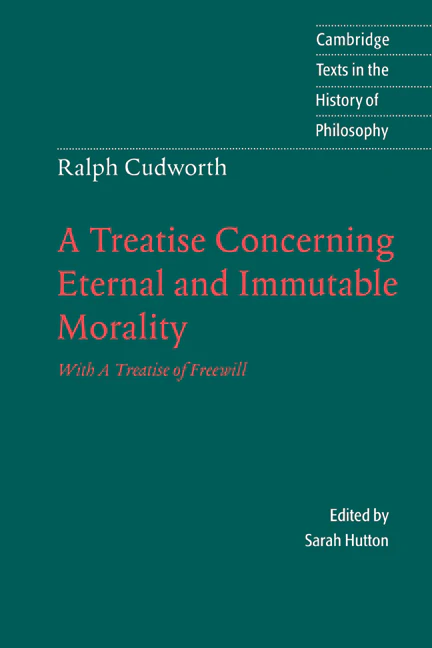
Ralph Cudworth: A Treatise Concerning Eternal and Immutable Morality
Ralph Cudworth: A Treatise Concerning Eternal and Immutable Morality
Ralph Cudworth (1617–1688) deserves recognition as one of the most important English seventeenth-century philosophers after Hobbes and Locke. In opposition to Hobbes, Cudworth proposes an innatist theory of knowledge which may be contrasted with the empirical position of his younger contemporary Locke, and in moral philosophy he anticipates the ethical rationalists of the eighteenth century. A Treatise Concerning Eternal and Immutable Morality is his most important work, and this volume makes it available, together with his shorter Treatise of Freewill, with a historical introduction, a chronology of his life, and an essay on further reading.
Original: $48.30
-65%$48.30
$16.90Product Information
Product Information
Shipping & Returns
Shipping & Returns
Description
Ralph Cudworth (1617–1688) deserves recognition as one of the most important English seventeenth-century philosophers after Hobbes and Locke. In opposition to Hobbes, Cudworth proposes an innatist theory of knowledge which may be contrasted with the empirical position of his younger contemporary Locke, and in moral philosophy he anticipates the ethical rationalists of the eighteenth century. A Treatise Concerning Eternal and Immutable Morality is his most important work, and this volume makes it available, together with his shorter Treatise of Freewill, with a historical introduction, a chronology of his life, and an essay on further reading.